



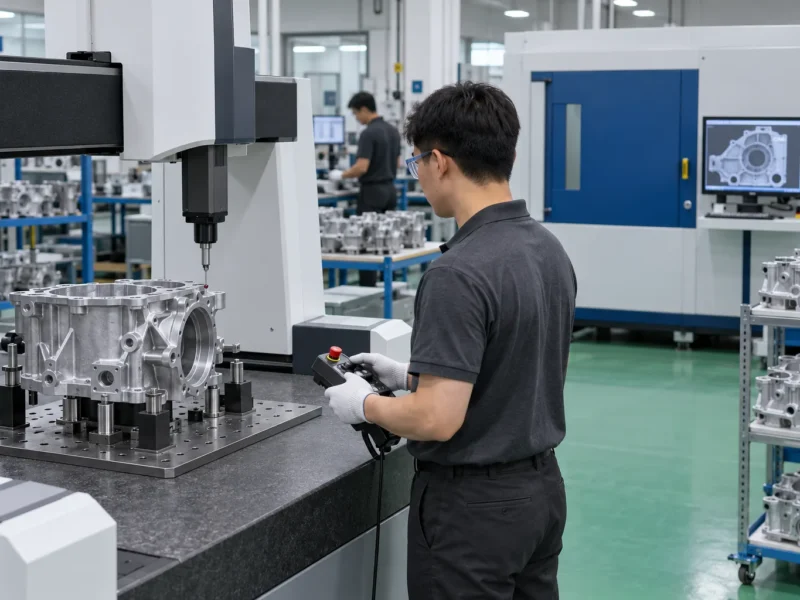
Porosity, small voids inside a casting, is the defect buyers ask about most. Some porosity is normal in high pressure die casting. The aim is to keep it small and away from the faces that are machined, sealed or loaded, and to agree in writing how much is acceptable where.
Two kinds of porosity
| Gas porosity | Shrinkage porosity | |
|---|---|---|
| Cause | Air and die lubricant vapor trapped during the fast fill; some hydrogen from the melt | Metal contracting as thick sections solidify last |
| Appearance | Round, smooth-walled voids | Irregular, jagged voids |
| Where | Near the end of fill, where flow fronts meet | In thick sections, bosses and junctions |
How porosity is prevented
Part design
- Uniform walls; core out thick sections and bosses.
- Generous radii and gradual transitions.
- Keep machined and sealing faces out of thick, last-to-solidify areas.
Die design
- Gates placed for short, even flow paths.
- Overflows and vents at the end of fill; vacuum assistance where the part needs it.
- Cooling that controls where the casting solidifies last.
Process control
- Clean, degassed melt at the right temperature.
- A slow first-stage shot that fills the sleeve without folding air into the metal, a correct switch-over point, then fast fill and intensification pressure.
- Die lubricant applied thinly and evenly, with the die surface dry before the shot.
How porosity is found
Common methods are X-ray or CT inspection, sectioning of sample castings, and leak testing of pressure-tight parts. ASTM E505 reference radiographs are often used to grade porosity in aluminum and magnesium die castings. Acceptance limits work best when they are set by zone: strict on sealing faces and bearing bores, looser in non-critical areas.
Related: die casting design guidelines and aluminum vs zinc die casting.
Frequently asked questions
Can porosity be eliminated completely?
Not in conventional high pressure die casting. It can be kept small and away from critical areas; vacuum die casting reduces gas porosity further.
What is impregnation?
A process that seals micro-porosity by filling it with resin under vacuum and pressure. It is used on castings that must be leak tight.
Why does machining reveal porosity?
The die-cast skin is dense. Cutting deeper into thick sections can open voids beneath it, so machining allowances are kept small.
Have a casting to quote? Tell us the part, the alloy and the annual volume through our inquiry form. We reply by e-mail, and you can send the drawing and 3D file in that thread for a DFM review and quotation.