



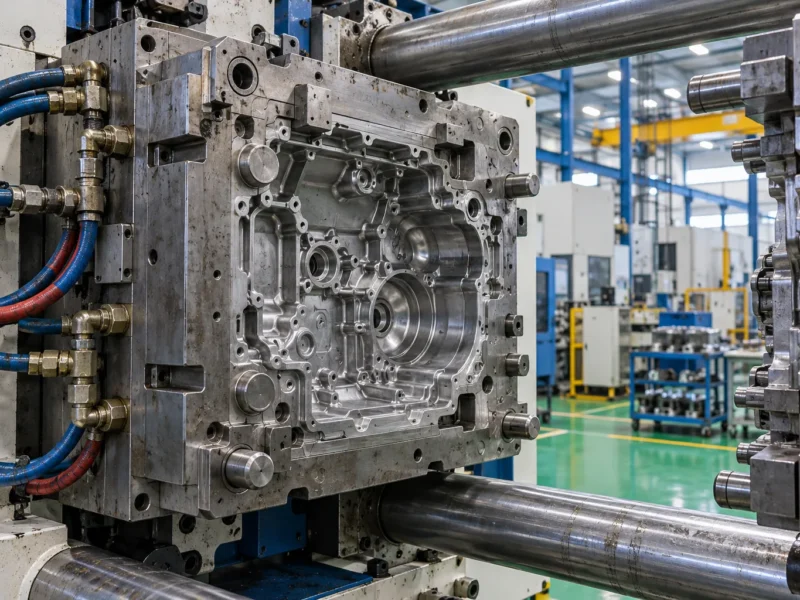
Porosity, cold shuts, sink marks and parts sticking in the die often start on the drawing, and they are cheapest to fix there. These are the points we check in a DFM review. The values are typical starting points; part size, flow length and alloy change them.
Design rules
| Feature | Typical guideline | Why |
|---|---|---|
| Wall thickness | Aluminum about 1.5–4 mm; zinc thinner; as uniform as possible | Thick sections solidify last and cause porosity and sink |
| Transitions | Gradual, with tapers | Abrupt changes cause turbulence and hot spots |
| Draft | Aluminum about 1–2°, more on inner walls and cores; zinc about 0.5–1° | Castings shrink onto cores and must release |
| Fillets and radii | Radius every inside and outside corner | Better flow, less cracking, longer die life |
| Ribs | Thinner than the wall, drafted, with root radii | Stiffness without thick sections |
| Bosses | Cored out, tied to walls with ribs | Avoids heavy, porous masses |
| Holes | Cored with draft; precise holes machined | Small deep cores bend, break and overheat |
| Undercuts | Avoid, or accept slides | Slides add die cost and maintenance |
| Machining allowance | A few tenths of a mm up to about 1 mm | Deep cuts open porosity under the dense skin |
Plan the gate, overflows and vents
Metal enters the cavity through the gate and pushes air ahead of it into overflows and vents. The gate position decides flow length, where flow fronts meet and where porosity collects. Mark on the drawing which surfaces are cosmetic, which must be leak tight and which are machined, so the gating can be placed to suit.
Tolerances
Die castings hold dimensions well, but features across the parting line or formed by slides vary more than features within one die half. Use a general casting tolerance standard such as ISO 8062-3 or NADCA for most features, tighten only where function needs it, and machine those features.
See also die casting porosity: causes and prevention and what drives die casting mold cost.
Frequently asked questions
What is the minimum wall thickness for aluminum die casting?
It depends on part size and flow length. Small aluminum parts can go to about 1 mm; larger parts usually need 2 mm or more. Zinc allows thinner walls than aluminum.
How much draft does a die casting need?
Typically about 1–2° for aluminum, with more on inner walls and cores than on outer walls; zinc often needs only about 0.5–1°.
Should I specify tolerances to the general casting standard?
Yes for most features. Add tighter tolerances only where function requires them; those features are usually machined.
Have a casting to quote? Tell us the part, the alloy and the annual volume through our inquiry form. We reply by e-mail, and you can send the drawing and 3D file in that thread for a DFM review and quotation.