China United Mould

Logo 2021

Die Casting

High pressure die casting

Custom die castings made from your drawing

In high pressure die casting, molten aluminum or zinc is injected into a hardened steel die at high speed and then held under intensification pressure while it solidifies. The cavity fills in a few hundredths of a second (typical) and the casting is ejected seconds later. You get a near-net-shape part with thin walls, cast-in holes and a surface that needs work only where it is machined or finished. The process pays off at annual volumes from a few thousand to several hundred thousand parts (typical).

We supply aluminum and zinc die castings to your drawing, with the die, trimming, CNC machining and surface finishing.

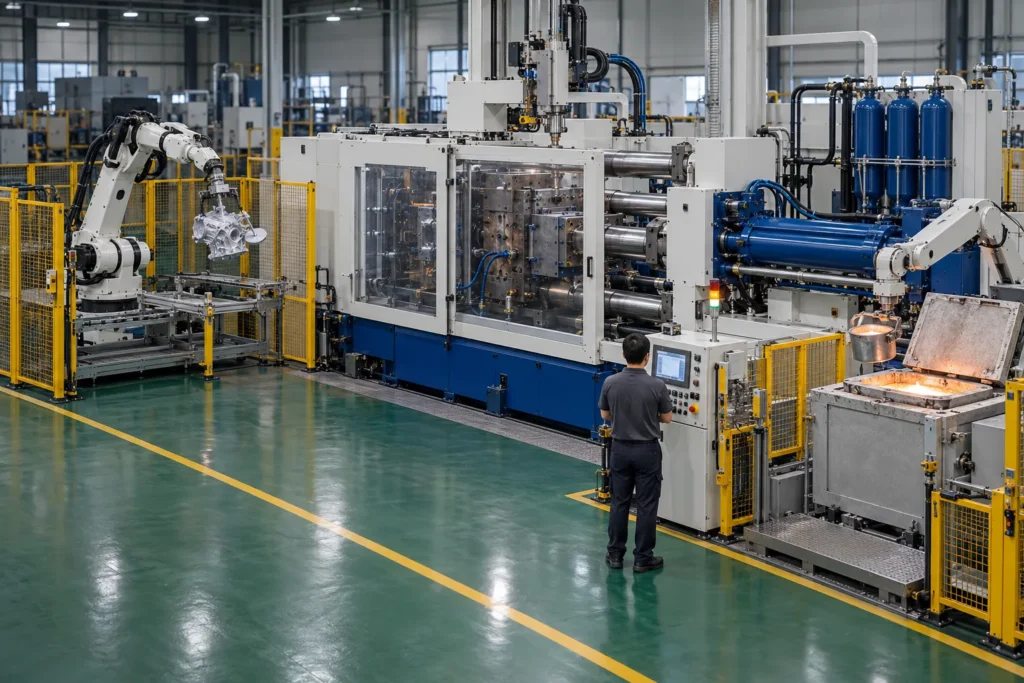
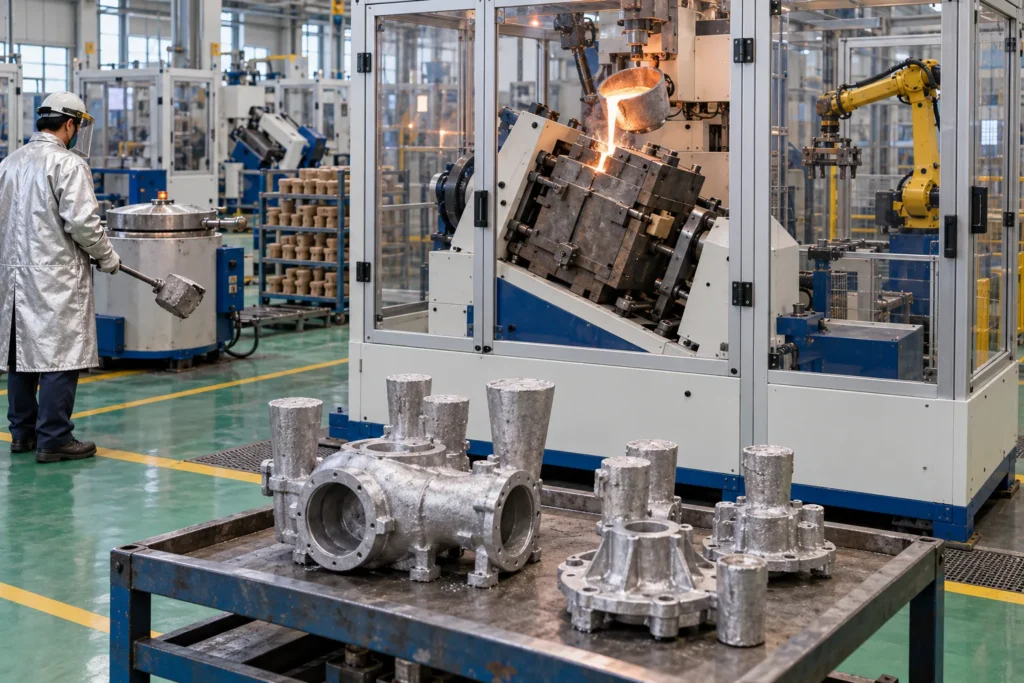
Cold chamber aluminum die casting cell with holding furnace, automatic ladle and extraction robot

Cold chamber and hot chamber die casting

Cold chamberHot chamber
How metal is fedLadled, by hand or by an automatic ladle, from a holding furnace into the shot sleeve for every shotThe gooseneck and plunger sit in the molten metal pot; each stroke pushes metal into the die
WhyMolten aluminum attacks iron and steel, so the injection system cannot stay in the meltZinc melts at about 385 °C, low enough for a submerged injection system
Typical alloysAluminum (A380, ADC12), larger magnesium parts, brassZinc (Zamak 3, 5, 2), small magnesium parts
CycleLonger, ladling adds time to each shotShorter, small zinc parts often run several shots a minute
Typical partsHousings, heat sinks, brackets, structural partsSmall precise parts, hardware, decorative parts

Typical, simplified comparison.

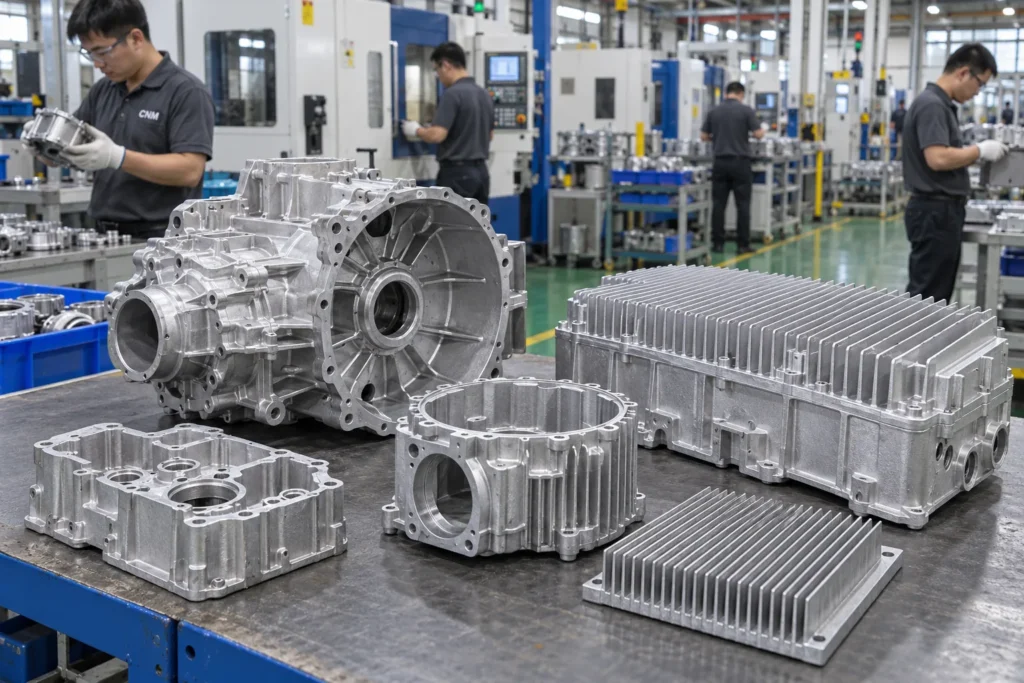
Housings, heat sinks, enclosures and brackets in A380, ADC12 and A360.

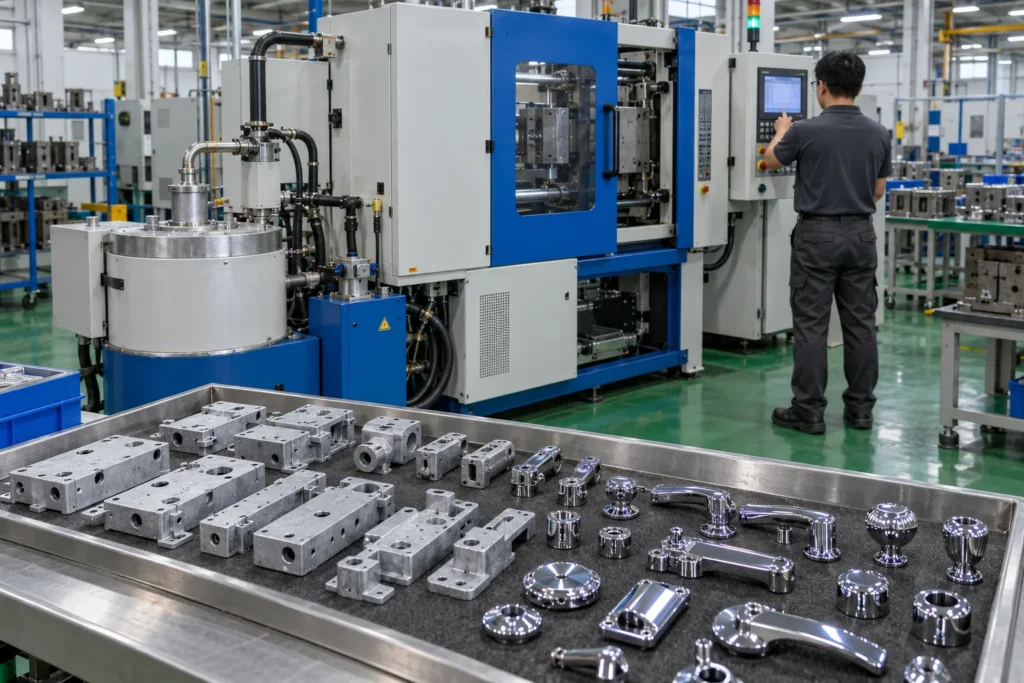
Zamak 3 and Zamak 5 die castings: fine detail, thin walls, ready for plating.

When magnesium makes sense, how it compares with aluminum, and what it requires.

Gravity (permanent mold) and sand castings for heat-treated, thicker or lower-volume parts.

Die casting FAQ

What is high pressure die casting?

Molten metal, usually aluminum or zinc, is injected into a hardened steel die at high speed and held under pressure while it solidifies. It gives complex, thin-walled parts with consistent dimensions. Typical cycle times run from a few seconds for small zinc parts to a minute or more for large aluminum housings.

When is die casting the right process?

When the part has thin walls and a complex shape and the volume is high enough to pay for a steel die, typically several thousand parts a year or more. Below that, gravity or sand casting, or machining from solid, often costs less overall.

What do you need to quote a die casting?

A 3D model (STEP or IGES), a 2D drawing with tolerances, the alloy or required properties, the annual volume, and any machining, finishing, leak-tightness or X-ray requirements.

Do you supply the die and the castings?

Yes. We design and build the die, run the trials and supply castings trimmed, machined and finished as your drawing requires. Die ownership is stated in the quotation.


Have a casting to quote? Tell us the part, the alloy and the annual volume.